Stable and strong
Implants are anchored in bone, so you can eat what you like without worrying about slipping.
An implant replaces the root as well as the tooth, so you can chew, speak and smile without thinking about it.
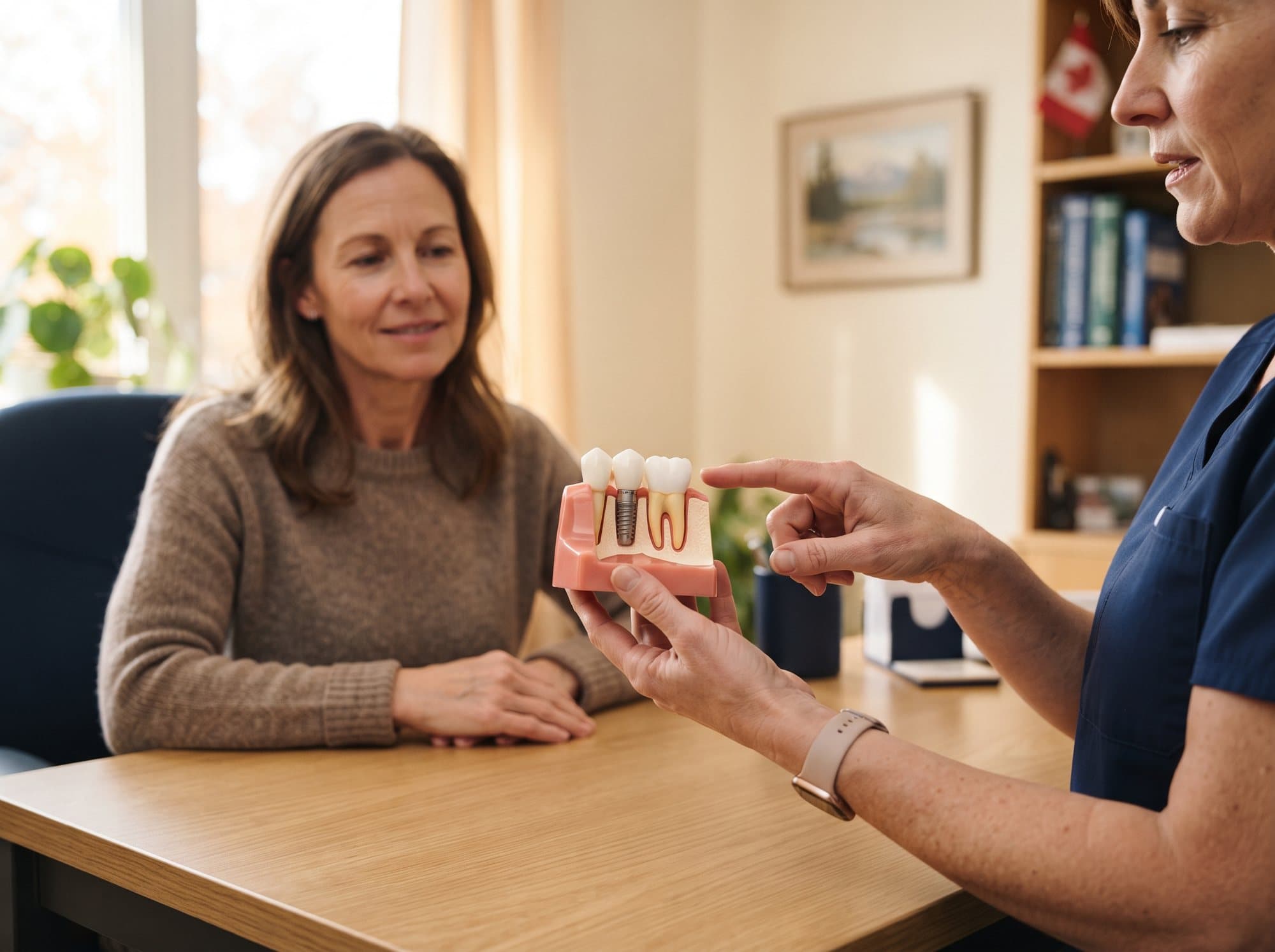
A dental implant is a small titanium post placed in the jaw where a tooth's root used to be. Over a few months the bone bonds to it, and a crown, bridge or denture is then attached on top. The result looks and works like a natural tooth, and unlike a bridge it doesn't rely on the neighbouring teeth for support.
Implants are used in three main ways: a single implant and crown for one missing tooth; two or more implants supporting a bridge where several teeth are gone; and implant-supported dentures, where a few implants hold a full denture firmly in place so it doesn't slip when you eat or talk.
Dr. Parminder Singh has a particular interest in implant dentistry, and implant cases here are planned carefully with digital X-rays and a thorough look at your gums, bite and overall health. If bone has shrunk after a tooth has been missing for a while, a bone graft can rebuild it before or during implant placement.
Implants are anchored in bone, so you can eat what you like without worrying about slipping.
A missing root lets bone shrink over time. An implant keeps the bone stimulated.
No grinding down of neighbouring teeth, as a conventional bridge requires.
With good hygiene and regular check-ups, implants can last for decades.
An exam, X-rays and a frank conversation about whether an implant, bridge or denture suits you best.
If the jaw is thin, we add grafting material to build it up. This adds a few months of healing.
The post is placed under local anaesthetic in a single appointment. Most patients are surprised how straightforward it is.
The bone fuses to the implant over roughly three to six months. A temporary tooth can usually cover the gap.
Once healed, we take impressions and fit your crown, bridge or denture attachment.
Implant treatment is priced by the case, since one tooth with plenty of bone is quite different from a full arch with grafting. We give a written estimate after the consultation. Some private plans cover part of the cost, and coverage under the Canadian Dental Care Plan is limited; we'll check what applies to you before you commit to anything.
After placement, you'll have some tenderness for a few days that responds to regular pain relievers. Long term, implants need the same care as natural teeth: brushing, flossing and hygiene visits, since gum infection around an implant is the main thing that shortens its life.
If your question isn't here, call us. A real person picks up during office hours.
The placement is done under local anaesthetic, so you shouldn't feel pain during the procedure. Afterwards, most people describe a few days of soreness similar to a tooth extraction.
Usually three to six months from placement to final tooth, longer if bone grafting is needed first. The waiting is mostly healing time, not appointments.
Age alone isn't a barrier. What matters is bone, gum health and general health. Many implant patients are in their seventies and eighties.
Bone grafting can often rebuild enough to support an implant. We'll assess this on your X-rays and tell you honestly what's possible.
Yes. Two to four implants can anchor a lower or upper denture so it snaps into place and stays put.
Send a request and Sandy or Shantell will call you back during office hours to find a time that fits. Emergencies: please phone us directly.